How the Middle East Conflict Is Driving Market Volatility
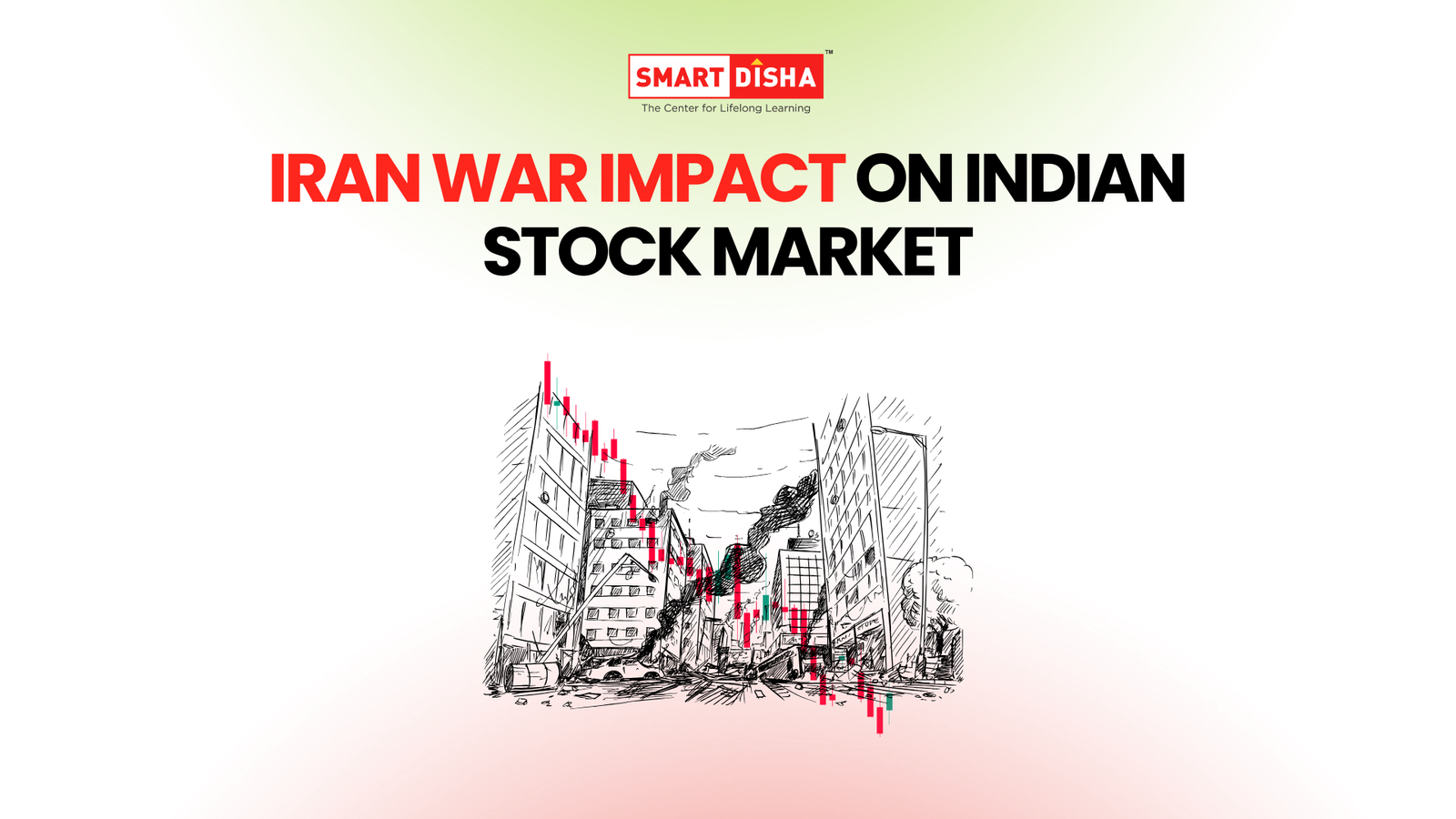
Iran war impact on the Indian stock market has led to increased volatility, with global markets, including India’s benchmarks, experiencing sharp declines. This geopolitical shock has created a risk off sentiment, pushing investors away from equities and toward safe havens like gold and bonds. On March 2, the Sensex plunged over 1,000 points, and the Nifty 50 slid below key psychological levels, driven by the escalating conflict and rising crude oil prices
Why This Matters for Indian Markets
India is particularly sensitive to Middle East conflicts due to:
- It imports approximately 55% of its crude oil from the Middle East
- Oil price spikes lead to inflation concerns and sector rotations
- FII (Foreign Institutional Investor) selling in risk off environments
This doesn’t just affect headline indices; sector performance diverges sharply depending on exposure to energy costs, global demand, and investor confidence
Impact on Key Market Drivers
Oil & Crude Price Shock
Escalation in the Iran conflict has pushed crude oil prices to multi month highs due to supply disruption risk, particularly around the strategic Strait of Hormuz
What this means:
- Higher fuel and input costs put pressure on profit margins
- The inflationary concern causes market jitters, leading to more cautious trading
- Higher oil prices also threaten broader global economic growth, which puts additional pressure on emerging markets like India
Equities Under Pressure
Indian shares have faced broad selling across sectors as investors turn risk-averse:
- Auto, bank, FMCG stocks have shown weakness
- Aviation and travel stocks fell sharply due to regional disruption
- Energy and defense stocks tend to outperform amid conflict related demand shifts
Safe havens like gold and silver have seen sharp increases, reflecting investor flight to safety
Currency & FII Flows
- The rupee weakened, reflecting the trade balance pressure from higher oil imports
- Foreign Institutional Investors (FIIs) turned sellers as risk sentiment worsened
Nifty Index Level
The Nifty has shown clear reactions at critical zones influenced by geopolitical sentiment. Traders should watch these levels closely:
| Level | Importance | What It Signals |
| 24,500 | Major support | May hold if sentiment recovers quickly |
| 24,000-24,300 | Panic sell zone | If broken, deeper correction likely |
| 25,500 | Immediate resistance | Defensive bulls needed to overcome |
| 26,000-26,200 | Strong zone | Confirmation of recovery momentum |
Short term traders are watching these levels closely as geopolitical news flows continue to influence market direction
Why Geopolitical Conflicts Affect Markets
Geopolitical risk introduces uncertainty and volatility, causing risk-averse investors to exit equity markets. Here’s why:
- Oil price shocks: Conflict disrupts global oil supply, especially in oil sensitive economies like India
- Investor confidence: Uncertainty in global politics shakes investor confidence, leading to capital flight
- Sector rotation: Safe haven sectors like gold, energy, and defense stocks typically outperform, while cyclical sectors like aviation and consumer discretionary lag
Live Nifty Trading Strategy
Here’s a practical approach to trading the Nifty during this period of geopolitical uncertainty:
Strategy A : Short Term Volatility Plays
- Indices Short/Put Spreads
In risk off environments, Nifty short positions or put spreads could benefit from declining markets - Gold & Safe Asset Exposure
As crude oil prices rise, gold futures or ETFs typically rally. Consider allocating a portion of your portfolio to these assets - Short Term Range Trading
For range bound markets, sell near resistance levels and buy near strong support. This strategy works best until the market confirms a clear trend direction
Strategy B : Sector Rotation Control
Geopolitical volatility tends to punish cyclical and risk linked sectors while rewarding defensive or safe haven sectors:
- Sectors to watch:
- Energy & Defense: Potential outperformers due to higher oil demand and defense spending projections
- Gold & Critical Commodities: Safe haven demand pushes investors toward precious metals
- Energy & Defense: Potential outperformers due to higher oil demand and defense spending projections
- Sectors underperforming:
- Travel & Aviation: Downtrends due to disrupted regional connectivity
- Consumer Discretionary: Weak consumer sentiment lowers demand
- Travel & Aviation: Downtrends due to disrupted regional connectivity
Risk Management Checklist
When trading in times of geopolitical risk, it’s essential to adhere to disciplined risk management:
- Set tight stops around breakout levels to limit potential losses
- Avoid excessive leverage, especially in volatile markets
- Diversify across sectors to protect your portfolio
- Continuously monitor oil prices and key global events
- Track FII/DII flow data regularly to gauge investor sentiment
Strategic planning beats panic driven decisions. Volatility often gives way to long-term structural trends once certainty returns
FAQ
Q1: Will the Iran war have a long term impact on the Indian market?
Geopolitical shocks tend to have short to medium term impacts. Once clarity returns and the situation stabilizes, long-term fundamentals drive market recovery
Q2: Why does crude oil affect India’s stock market so much?
India relies heavily on oil imports. Rising oil prices increase inflationary pressures and put a strain on the economy, negatively affecting stock market performance, particularly in energy sensitive sectors
Q3: Should retail traders panic sell during conflicts?
Panic selling locks in losses. It’s best to stay calm, manage risks effectively, and wait for the market to stabilize. Always use technical levels and market sentiment as a guide
Q4: Are there sectors that benefit during geopolitical conflict?
Yes, sectors such as energy, defense, and safe havens like gold tend to outperform during geopolitical instability, while cyclicals like travel and consumer discretionary may lag
Q5: How long will the Iran war impact the Indian stock market?
The market impact will last as long as the conflict causes uncertainty. Once the situation stabilizes, the market is likely to recover, though oil prices may continue to influence performance
Conclusion
The ongoing Iran-Israel-US war has created significant market volatility. It has especially impacted India’s stock market, with sectors such as energy, defense, and safe-havens reacting positively, while others like aviation and consumer discretionary face downward pressure
Traders can benefit from short term volatility plays and sector rotation strategies. However, managing risk and staying disciplined in these uncertain times is crucial. Keep monitoring key levels and market sentiment to guide your trades effectively
“Enhance your trading strategies and gain valuable insights into market movements. Join Smart Disha Academy today and start your journey with our Share Market Course in Ahmedabad.”